
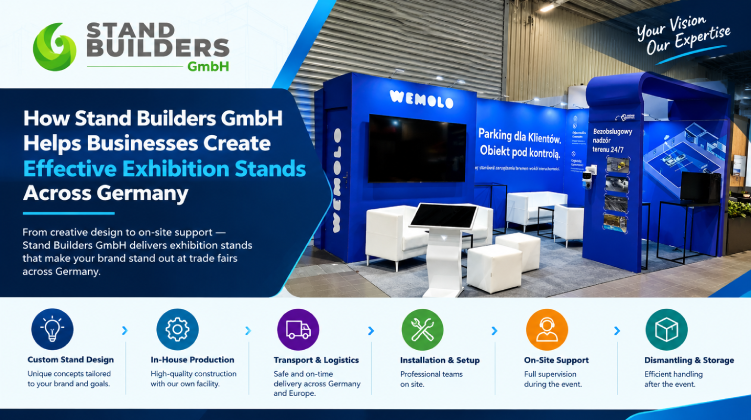
Trade fairs provide valuable opportunities for businesses to introduce products, develop professional relationships, and reach potential customers in competitive markets. However, successful participation requires more than reserving exhibition space and displaying promotional materials. Companies investing in company exhibition stands in Germany need to consider how their exhibition environment communicates brand identity, supports visitor interaction, and contributes to commercial objectives. Stand Builders GmbH, a Berlin-based exhibition stand design and construction company, helps exhibitors address these requirements through coordinated planning, design, production, and installation services.
The Business Value of a Well-Planned Exhibition Stand
An exhibition stand represents a company’s physical presence within a trade fair. Unlike digital advertisements or printed marketing materials, it creates opportunities for direct conversations, live product demonstrations, and personal interactions with prospective customers.
The design of this environment can influence how visitors understand a business. Clear branding communicates what the company offers, while organised presentation areas make products and services easier to explore. Comfortable meeting spaces also encourage conversations that may lead to future partnerships.
For companies entering new markets, exhibitions provide an opportunity to introduce themselves to unfamiliar audiences. Established businesses may use the same events to launch products, strengthen customer relationships, or demonstrate technological developments.
These objectives should guide exhibition stand planning from the beginning. A stand developed primarily for product demonstrations will require a different layout from one intended for private business meetings.
What Makes an Exhibition Stand Suitable for Different Industries?
Exhibition requirements vary considerably between industries. A design that works effectively for a consumer goods company may not provide the necessary facilities for an engineering or industrial technology business.
Industrial and Manufacturing Exhibitions
Manufacturing companies often need exhibition stands capable of accommodating machinery, technical displays, and product demonstrations. These environments require careful consideration of equipment dimensions, visitor safety, electrical connections, and accessible presentation areas.
Technical information should remain easy to understand, particularly when exhibitors are presenting complex products to international audiences.
Technology and Digital Business Events
Technology companies frequently rely on interactive presentations, digital screens, and software demonstrations to explain their solutions.
Their exhibition stands may benefit from dedicated demonstration counters, integrated display systems, and areas where visitors can speak directly with technical representatives.
An effective design should allow technology to support communication rather than overwhelm the visitor experience.
Consumer Products and Lifestyle Exhibitions
Businesses presenting consumer products often prioritise visual merchandising, product accessibility, and consistent branding.
Lighting, display furniture, graphics, and open layouts can help visitors recognise products quickly. Where appropriate, demonstration areas can allow potential customers to experience products directly.
Understanding these industry differences helps businesses choose exhibition environments that support their specific presentation needs.
Choosing an Exhibition Stand Structure That Matches Business Goals
The type of exhibition stand selected can influence construction requirements, available space, and long-term exhibition costs.
Stand Builders GmbH provides four principal exhibition stand solutions designed for different exhibiting requirements.
Custom exhibition stands offer considerable design flexibility. Businesses can develop distinctive layouts, architectural features, and branded presentation areas based on their products and marketing objectives. These structures are useful when a company requires an individual visual identity or specialised display arrangements.
Modular exhibition stands use adaptable components that can be rearranged for different exhibition spaces. They are particularly relevant to companies participating in multiple trade fairs because suitable components can be reused and adjusted for future events.
Double-decker exhibition stands introduce an additional level, creating separate areas for activities such as private meetings, hospitality, and product presentations. Their suitability depends on venue regulations, structural requirements, and available exhibition space.
Country pavilion exhibition stands provide coordinated presentation environments for groups of businesses exhibiting under a shared national or regional identity. They allow participating organisations to maintain individual branding within a unified structure.
Selecting the appropriate solution requires balancing design ambitions with practical considerations such as budget, available space, event frequency, and technical restrictions.
Stuttgart’s Importance in Germany’s Exhibition Landscape
Germany’s exhibition industry extends across numerous cities, each offering opportunities for businesses operating in different sectors. Stuttgart is particularly relevant to companies involved in manufacturing, automotive technology, engineering, industrial innovation, and related business activities.
The city’s strong industrial environment makes trade fairs an important platform for presenting technical developments, connecting with suppliers, and exploring commercial partnerships.
For businesses exhibiting in Stuttgart, stand planning should reflect both the nature of the event and the expectations of its professional audience.
Designing for Technical and Business-Focused Visitors
Visitors attending industrial exhibitions may want detailed product information, technical explanations, and opportunities to discuss specific business requirements.
Exhibition stands should therefore provide practical demonstration areas, accessible information displays, and suitable meeting facilities.
Businesses preparing for local events can explore the role of an exhibition stand design company in Stuttgart when planning layouts, construction requirements, and exhibition logistics.
Stand Builders GmbH includes Stuttgart among its German exhibition service locations, supporting businesses that require coordinated stand design and construction.
Why Venue Preparation Matters
Exhibition venues establish technical and operational requirements that exhibitors must follow. These can include construction height restrictions, electrical specifications, fire safety standards, installation schedules, and access procedures.
Companies should review the relevant exhibitor manual before finalising their stand design. Early coordination helps identify potential limitations and reduces the risk of last-minute modifications.
This is especially important for complex structures, large equipment displays, and stands incorporating multiple technical systems.
From Design Concepts to Exhibition-Day Execution
Developing an exhibition stand involves several stages that must be completed in the correct sequence. Delays or misunderstandings during one stage can affect the entire project.
Stand Builders GmbH offers an integrated process covering initial briefing, 3D design, construction, packaging, transportation, installation, on-site supervision, and dismantling.
Turning Business Requirements into a Practical Design
The planning process begins with understanding the exhibitor’s goals, allocated space, preferred design, and technical needs.
Designers then translate these requirements into visual concepts. Three-dimensional presentations help businesses evaluate the proposed structure, visitor movement, branding placement, and functional areas before production begins.
This stage also provides an opportunity to identify changes that could improve accessibility, product visibility, or overall space utilisation.
Managing Production, Logistics, and Installation
Once a design is approved, production teams prepare the structural components, graphics, and other materials required for construction.
Stand Builders GmbH operates in-house production facilities and provides transportation and installation support. Coordinating these activities helps maintain consistency between the approved design and the completed exhibition stand.
After installation, final inspections and technical checks help ensure the stand is ready for visitors. Dismantling and storage arrangements can also be incorporated into the project plan.
Making Exhibition Investments More Effective
Exhibition participation involves several expenses beyond the stand itself, including floor-space rental, transportation, staffing, marketing materials, and travel.
Businesses can manage these investments more effectively by establishing priorities early and avoiding unnecessary design complexity.
For companies attending several events annually, reusable structural components may offer practical advantages. Modular systems can accommodate different layouts, while selected custom-built elements may be retained for future exhibitions where technically suitable.
It is also important to assess exhibition results using relevant business indicators. Qualified leads, productive meetings, product enquiries, and potential partnerships often provide more meaningful insights than visitor numbers alone.
Reviewing these outcomes helps companies refine their exhibition strategies and make better-informed decisions about future participation.
Conclusion
An effective exhibition stand is the result of careful planning, appropriate structural choices, and coordinated execution. Businesses must consider their audience, industry requirements, branding objectives, and exhibition venue conditions before deciding how their stand should be developed.
Stand Builders GmbH supports these requirements through custom, modular, double-decker, and country pavilion solutions, alongside design, manufacturing, logistics, and installation services. Its coverage of German exhibition destinations, including Stuttgart, provides businesses with access to stand-building services for different trade fair environments.
Ultimately, successful exhibition participation depends on creating a space that communicates clearly, supports meaningful conversations, and helps businesses achieve measurable commercial objectives.